
Case: Teleste
Modernisation of the Argus Network Management System (NMS)
Project highlights:
- Modern, browser-based WebUI that reduces onboarding friction, eliminates installation overhead and improves day-to-day operational efficiency.
- High-performance architecture capable of handling large data volumes and real-time events, ensuring the system scales reliably as network environments grow.
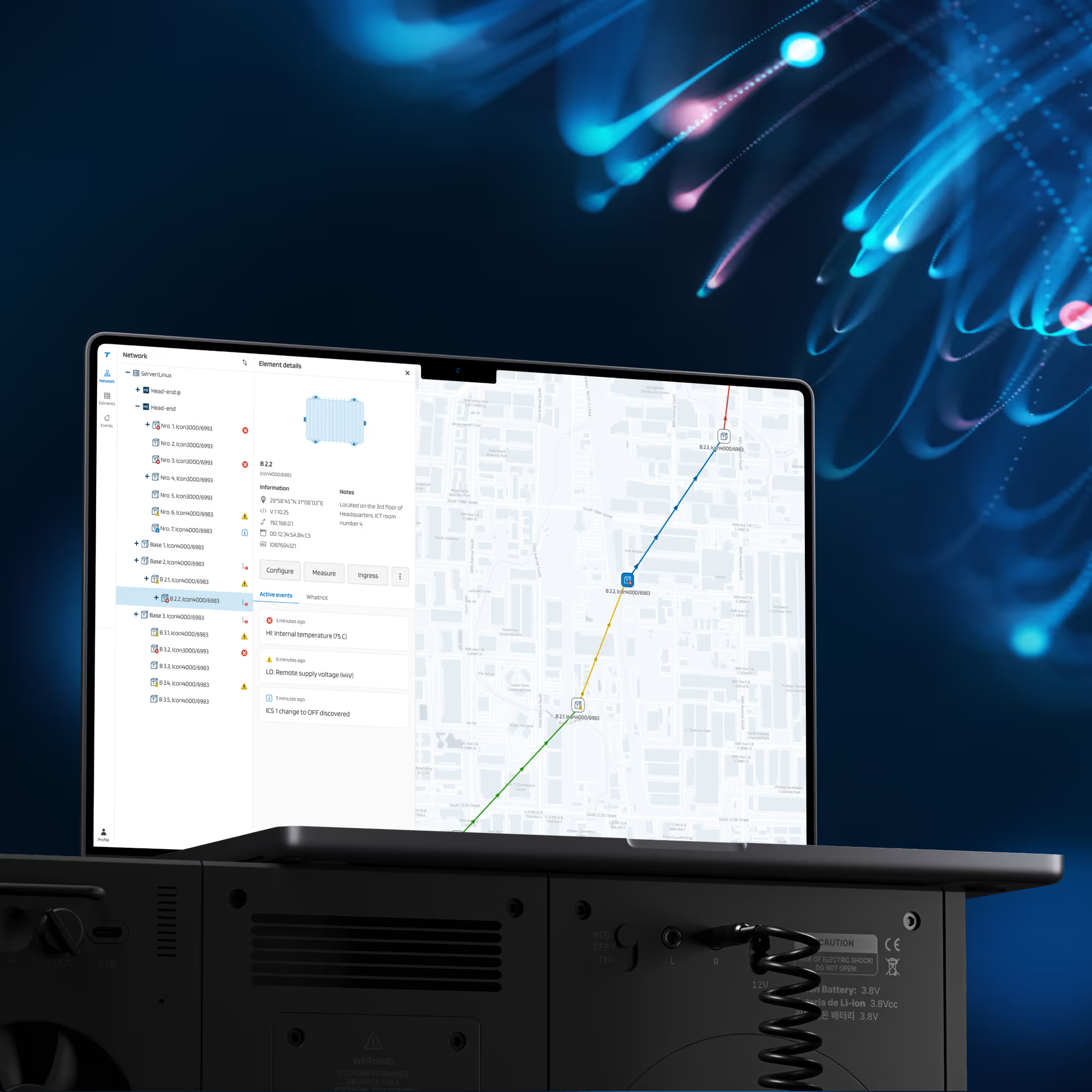
- Integrated, map-based network visibility that accelerates fault detection, clarifies signal impact and enables faster, more accurate field response across global networks.
Client
Teleste
Industry
Telecommunications / Broadband Network Management / Network Monitoring
solution
Web-based user interface for the Argus NMS system
technologies
React / Typescript / Maplibre / Kendo UI
Starting point
Argus is part of Teleste’s CATVisor software family and serves as the core network management system used by cable operators for daily monitoring, remote management and proactive fault prevention. Its purpose is to provide real-time visibility into network status and help operators resolve issues before they impact end customers.
As cable networks have grown in size and complexity, operators now expect far greater clarity, visual guidance and workflow efficiency from their tools. Over years of development, the Windows-based Argus had accumulated a broad feature set, but key workflows were increasingly hidden behind multi-level menus, reducing usability and discoverability in modern operational environments.

Challenge
A central challenge in the modernisation was to design a clear and streamlined user interface for a system whose structure and scope had grown significantly over years of development. Essential daily workflows needed to be surfaced and reorganised without changing the underlying backend logic, requiring a complete rethink of the UI hierarchy and interaction patterns.
At the same time, the new interface had to function with a backend architecture scaled from roughly 25,000 to as many as 200,000 devices and support real-time data flows.
The goal was to deliver a lightweight, visually guided UI that remains responsive even in significantly larger network environments.
Solution
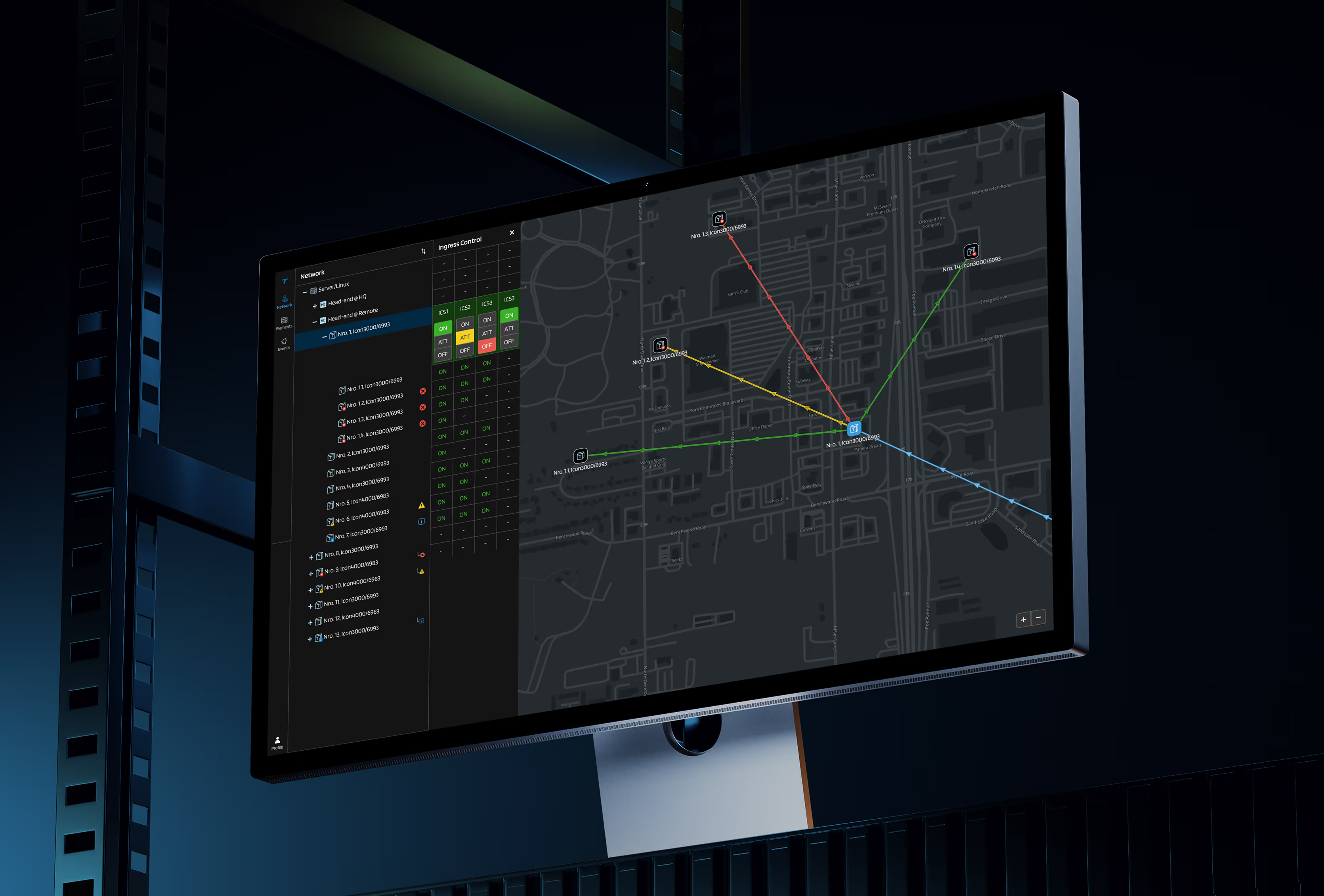
Taiste redesigned and implemented a new WebUI for Argus — a fully browser-based, zero-install interface built for clarity, speed and scalability. The solution introduces a map-centric network view powered by MapLibre and uses Kendo UI components to ensure a consistent and maintainable design system. A refreshed custom icon set, improved navigation and clearer interaction patterns lower the learning threshold whilst still supporting the depth required by expert users.
The interface was built on a modern component-based architecture that makes essential information immediately visible without navigating complex menus. UI development progressed in close collaboration with backend teams to ensure the system could operate with much larger networks and real-time data flows. STOMP-based messaging enables lightweight, responsive updates even in demanding environments.
The new browser-based Argus provides a robust foundation for future development and delivers a clearer, more visual and significantly modernised user experience.
Key Features
Balancing usability and complexity
Balance between an intuitive user interface and complex network management requirements.
Browser-based
A zero-install interface built for clarity, speed, and scalability accessible from any modern desktop web browser.
Integrated map view
Map-based views for real-time device and network management, scaling to global networks and geographies.
Ingress control
Ingress alarms directly from devices and remote management.
Mobile app integration
Web-browser integration with the Cadet mobile application (React Native) used by field technicians.