Many organizations share a problem: their data lives in too many places. Time tracking sits in one system, tasks and work in another, sales pipelines in a third, and key metrics get stitched together in spreadsheets that only one person really understands.
Taiste Lakehouse was built to help out. It creates a unified and trustworthy data foundation for all relevant data. It pulls information from across the tools and systems a company already uses, structures it consistently, and makes it available for human use by data scientists, analytics, applications, and AI.
Taiste Lakehouse connects to the systems where data originates whether that’s business tools like Harvest, GitLab, and HubSpot, manufacturing execution systems, IoT sensor networks, or environmental monitoring platforms. The platform is source-agnostic by design: if data can be accessed through an API, stored in a disk in any readable format (CSV, JSON, Parquet...) or can be accessed through a database connection, it can be brought into the lakehouse.
Data goes through a four-step process: collection from source systems, structuring through shared table definitions and rules, dependency-ordered updates, and storage in an analytics-ready format. The technology stack is intentionally lightweight: Python, DuckDB, Parquet, and SQL, no separate data warehouse platform required. On the access layer, FastAPI provides a REST interface, MCP (Model Context Protocol) makes curated data available to AI agents, and token-based authentication controls access.
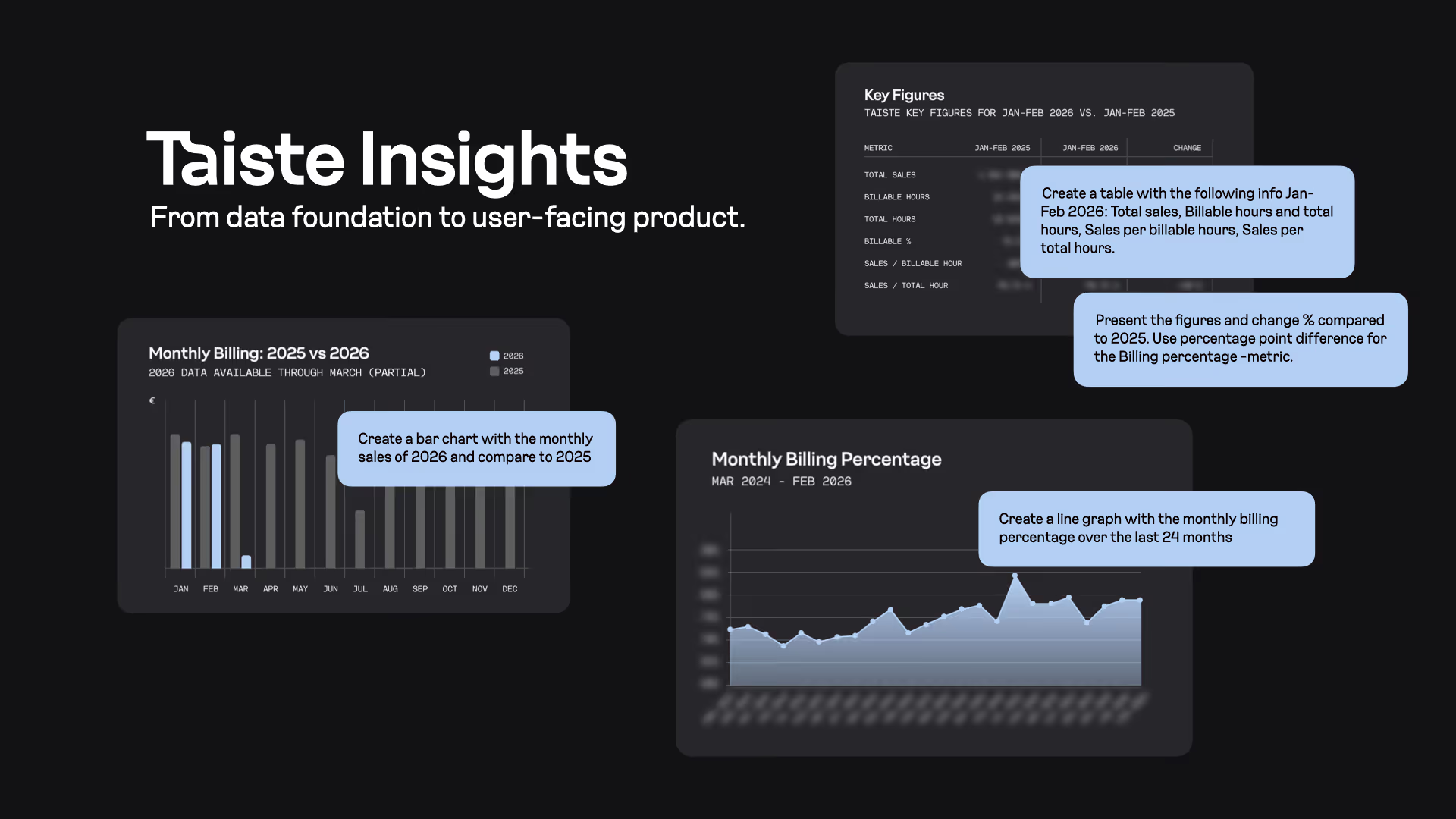
The structured data is then exposed through multiple channels: applications, analytics views, REST APIs, reports, and AI-facing interfaces.
Three qualities define what makes Taiste Lakehouse valuable in practice.
First, it provides a unified data foundation for humans and AI that all use the trusted layer as their source, eliminating diverging versions of the truth.
Second, the system is controlled and repeatable: update logic is defined once and runs automatically, with no reliance on isolated scripts or individual people.
Third, it is built to extend. New data sources and analytics views can be added without rebuilding the platform.
As AI capabilities become embedded in everyday tools, the bottleneck is shifting from “can we build the AI?” to “does the AI have access to trustworthy data?” A language model is only as useful as the data it can draw on. Organizations that invest in a clean, centralized data layer today, whether their core data comes from business operations, production lines, or field sensors, will be better positioned to take advantage of AI-driven analytics and automation as those technologies mature.
Taiste Lakehouse represents a pragmatic approach to that investment: lightweight tooling, modern standards, and a design that serves today’s reporting needs while being ready for tomorrow’s AI-powered workflows.